Building Walls with Hemp: Six Trials
Six trials with hurd (shiv), lime, and water: our first wall built with our own hands, a trial under snow in Sinop, a laboratory, homes, workshops, and an exhibition.
Six hempcrete trials and the approximate mix of each: the first wall we built with our own hands, a trial under snow in Sinop, laboratory measurements at İYTE, home applications with Aslı Tekin, workshops with Sergiy, and the wall at the Art on Hemp exhibition.
The first time you hear that a house can be built with a plant, it sounds like a fairy tale. Then you mix the material with your hands, press it against a wall, and you understand: there is chemistry in it. That chemistry is very old too; we are only remembering it.
This article describes six separate trials from our journey to build walls from hemp. Each one was done in a different place, with different hands, and the formulas changed a little each time. First, let us talk about the shared language, because all six trials rest on the same three materials.
Three Materials
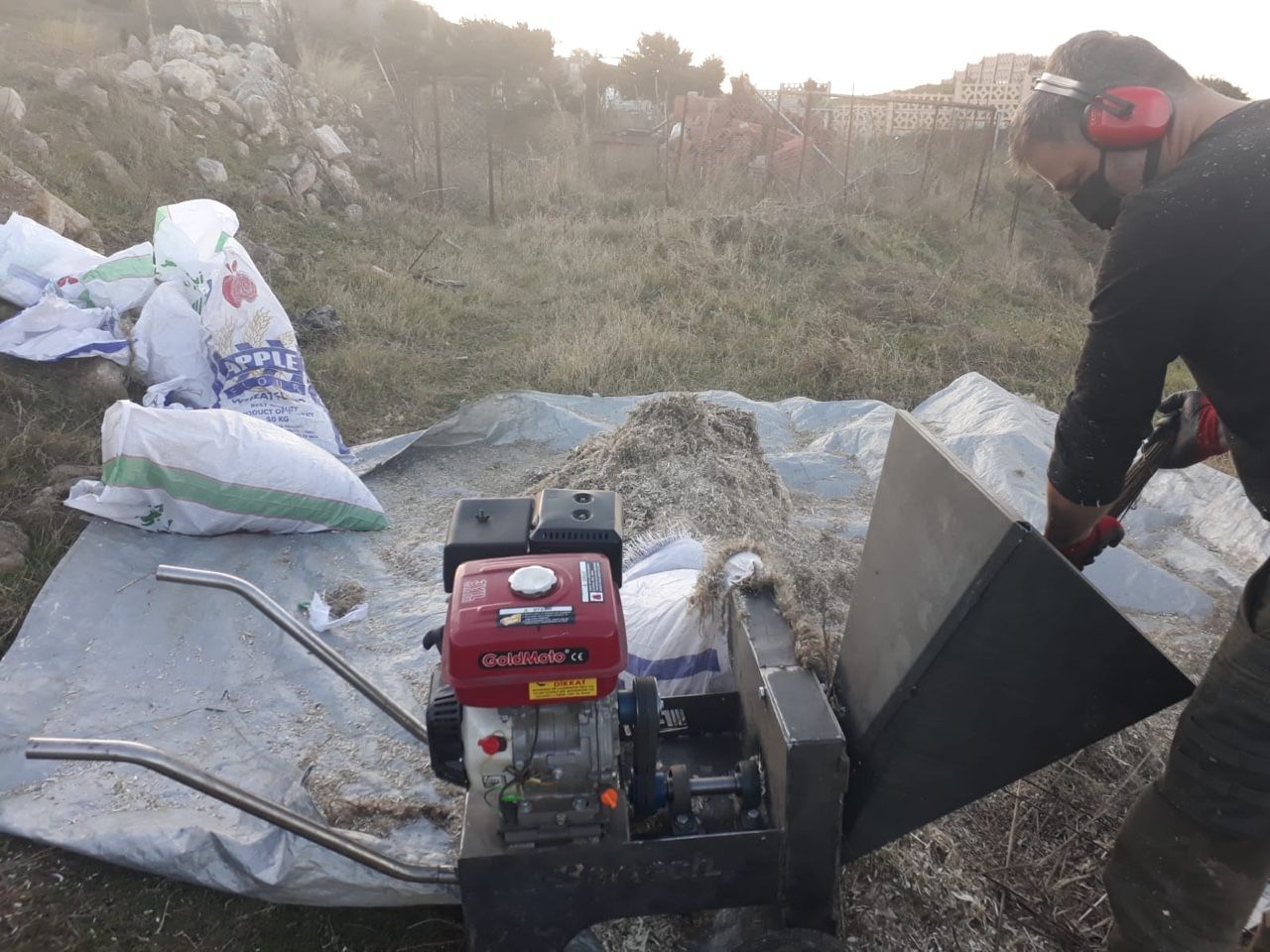
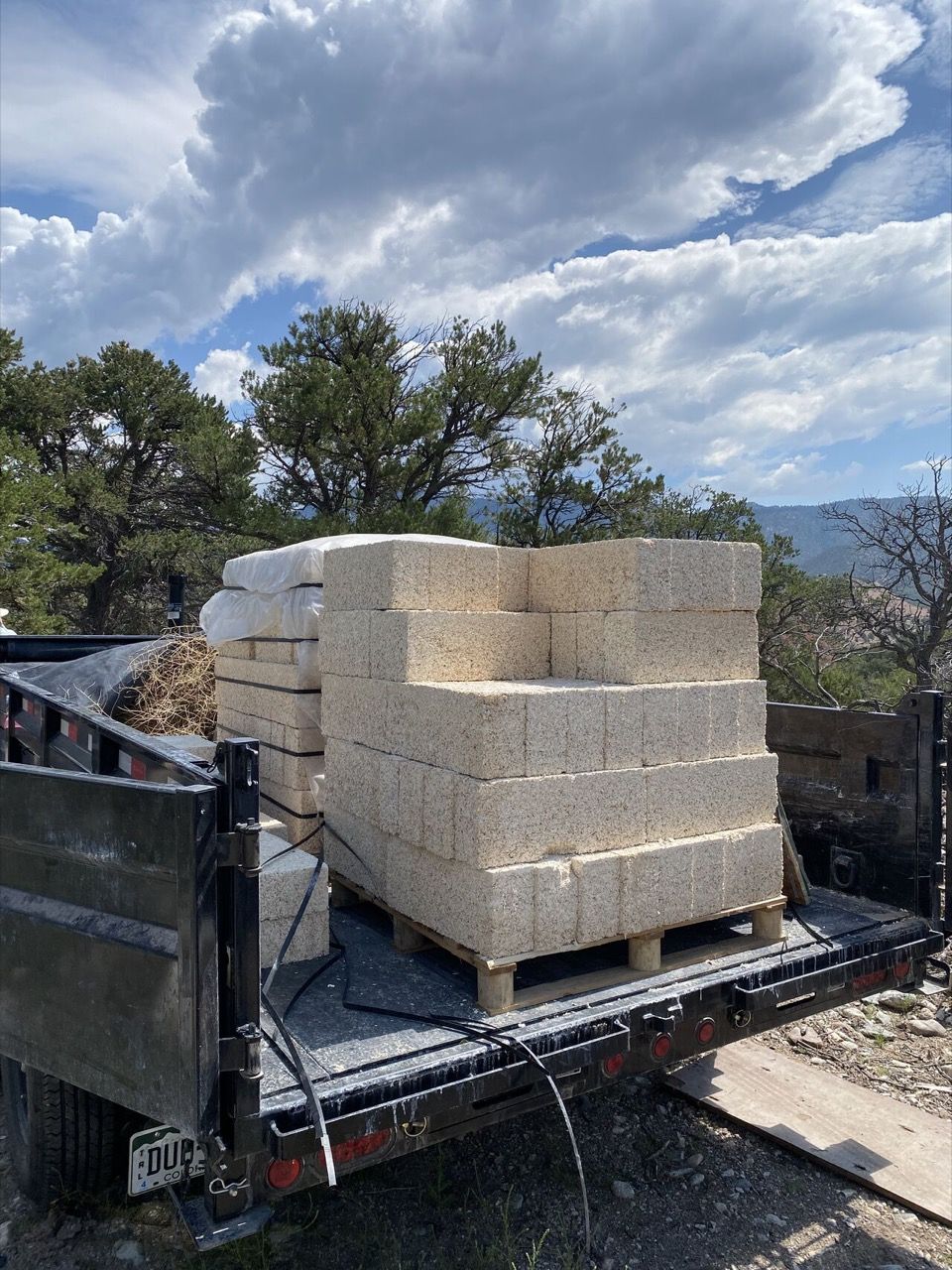
Hemp concrete, known in English as hempcrete, is made of hurd, lime, and water. Hurd is the woody inner core that remains after the fiber is removed from the stalk; in English it is called shiv or hurd. We took the hurd from our own legal hemp fields and cut it into four to five millimeter pieces in a feed grinder. The hurd makes the light, porous frame of the wall. Lime is the binder: when it mixes with water, it reacts and glues the hurd pieces together. Water also starts the reaction.
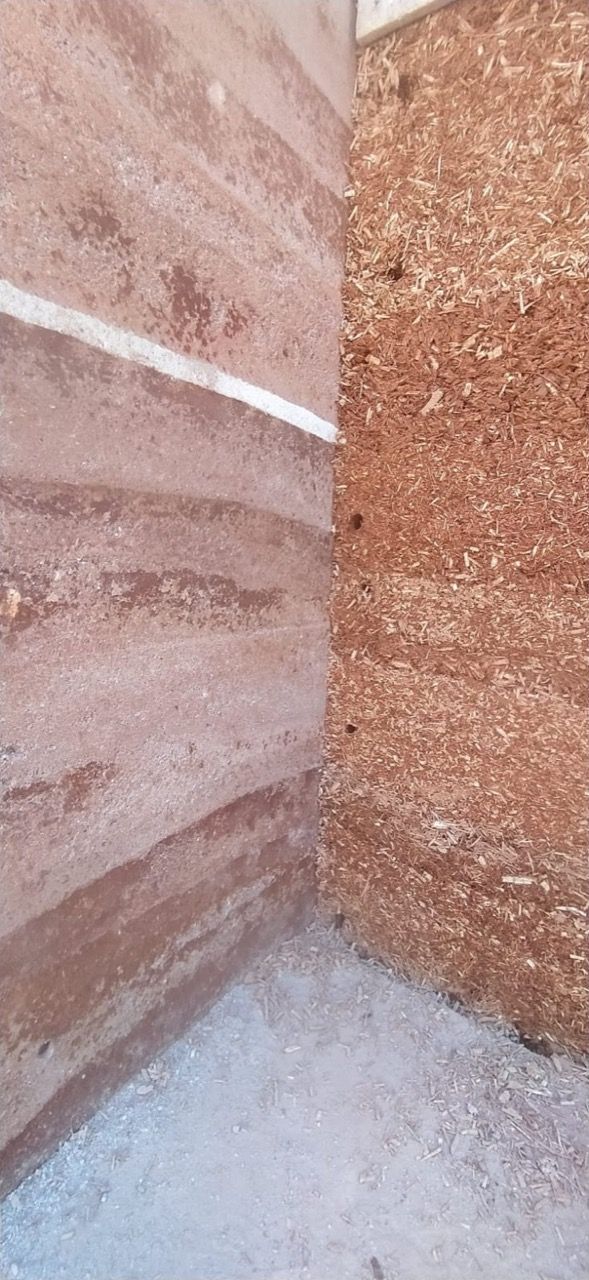
Here is something most people get wrong. In hemp concrete, lime does not fill all the gaps the way cement does in concrete. It coats the hurd pieces with a thin layer and holds them together where they touch. The spaces in between stay open. Those gaps are what make the material light and insulating: millions of tiny air pockets in the wall work like a quiet sponge that regulates heat and moisture. That is why hemp concrete does not carry loads. It is a filling and insulation material, a shell that breathes.
The right consistency is understood by hand more than by number. A handful of the right mix forms a loose ball, and it crumbles when you press it with your finger. Experienced builders call this "moist compost" or "crumbly oatmeal." Too much water and the wall does not dry for months; too little and the hurd does not hold to the lime. Roughly four measures of hurd to one of lime and one of water by volume is a good starting point. The ratio shifts a little depending on the climate, how wet the hurd is, and the type of lime.
One: With Our Own Hands
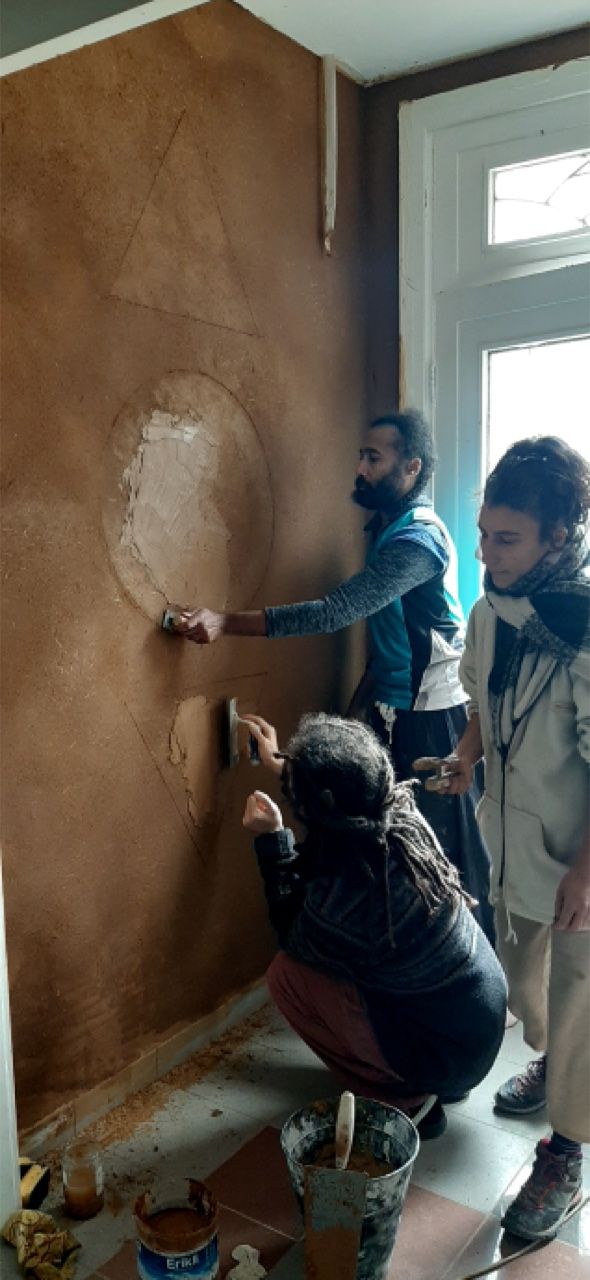
In our first trial we had no machine and no expert. We had a trough, hurd, lime, water, and our hands. We mixed the material by foot and with a shovel. The first wall was rough and amateurish, but it was ours. Breaking hemp that we had grown ourselves and pressing it into a wall with our own hands was the best way to get to know the material from start to finish. We learned from that wall too: as it dried, it told us where we had added too much water and where the lime had not held.
Approximate mix: 4 measures hurd, 1 measure slaked lime, 1 measure water, by volume. No additives; the simplest form. We learned the "moist compost" consistency here.
Two: In Sinop, Under Snow
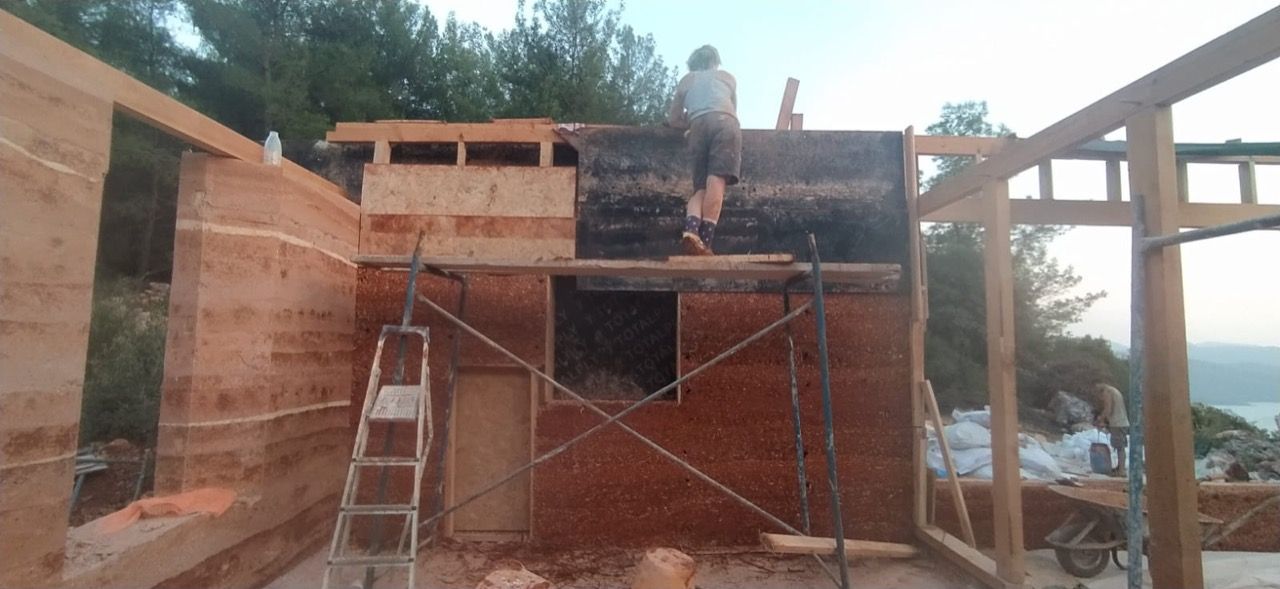
The second trial showed us how decisive the climate is. We worked in Sinop, in winter, under snow. Hemp concrete cures poorly in the cold: the lime reaction needs heat, carbonation slows down, and frost can ruin everything. Building a hemp wall under snow was a bit stubborn, but that stubbornness taught us a lot. Sinop's damp, cold air was the most honest teacher about the limits of the material. Anyone can build a wall in easy conditions; you really get to know the material when you build it under snow.
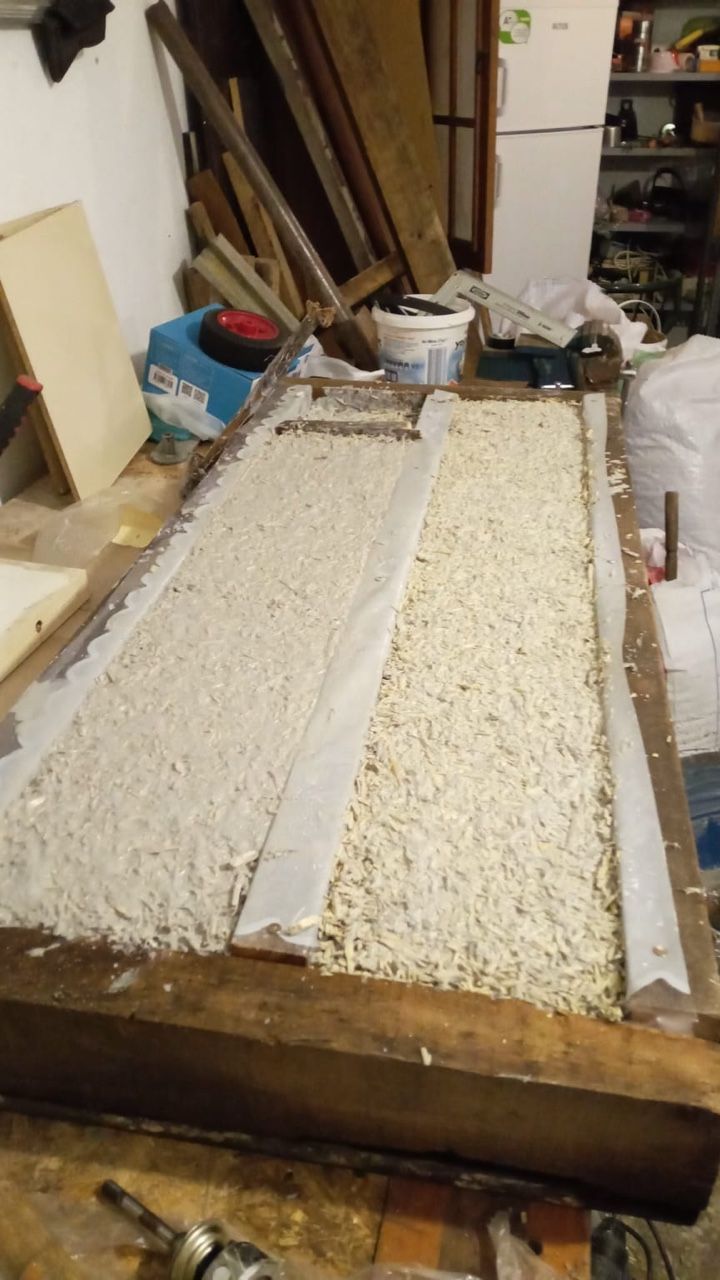
Approximate mix: 4 measures hurd, 1 measure lime, 0.75 measure water; the water was reduced. For faster setting, the lime ratio was increased a little, and a binder close to natural hydraulic lime was chosen. The wall was covered against frost.
Three: At İYTE, with Academics
The third stage moved the work into academia. We worked with specialist faculty at İzmir Yüksek Teknoloji Enstitüsü (İYTE). We met Betül here, remotely; she was a master's student in architecture and was writing her thesis on hempcrete. Up to that point we had learned by hand and by instinct, but the work also had a laboratory language: compressive strength, thermal conductivity, density, and moisture buffering. What we called "it held its consistency" now had a number and a curve. This stage put the language of soil and the language of numbers side by side, just as in the field we laid the farmer's calendar over the climate data.
Approximate mix: for an insulating wall, binder to hurd of roughly 1:1 by mass, with a target density of 300-400 kilograms per cubic meter. The ratios were verified by measuring compressive strength and thermal conductivity in the laboratory.
Four: With Aslı Tekin, in Homes
The fourth trial took the material out of the laboratory and into real homes. With Aslı Tekin, we built sample walls, partitions, and insulation layers in homes. Trying something in a workshop is one thing; putting it in a place where people live is another. A home asks questions you did not ask the material: Does it absorb moisture? Does it smell? Does it crack? Hemp concrete answers these questions well. It is a breathable material that does not grow mold and balances moisture.
Approximate mix: the main mix stayed at 4:1:1; the difference was on the surface. The walls were coated with a breathable lime plaster. Sealing hemp concrete with a paint that does not breathe smothers the whole point of it.
Five: With Sergiy, in Workshops
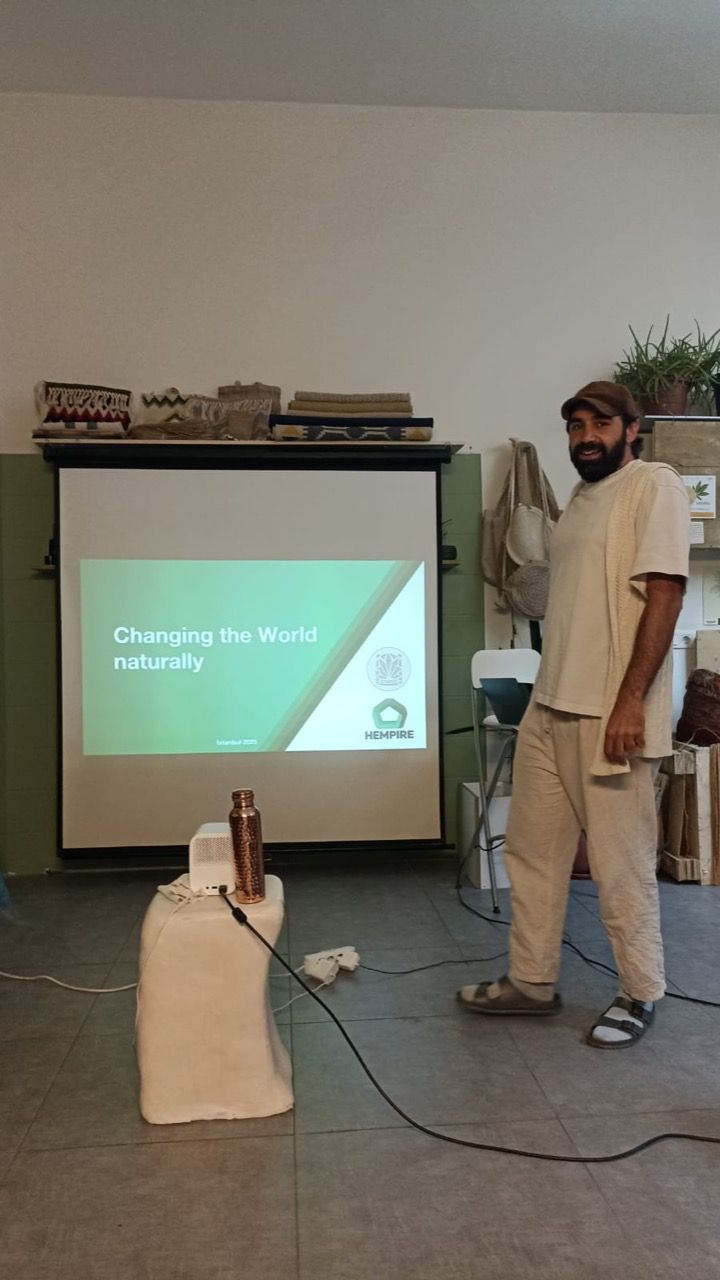
The fifth stage was about sharing. With Sergiy Kovalenkov, we ran workshops and taught people how to mix hurd and lime with their own hands and press the mix into molds. The best way to spread a material is to put it into people's hands. When someone in a workshop feels the "moist compost" consistency in their palm for the first time, they learn more than from pages of explanation. These workshops multiplied the "with our own hands" moment of our first trial; every participant built their own first wall.
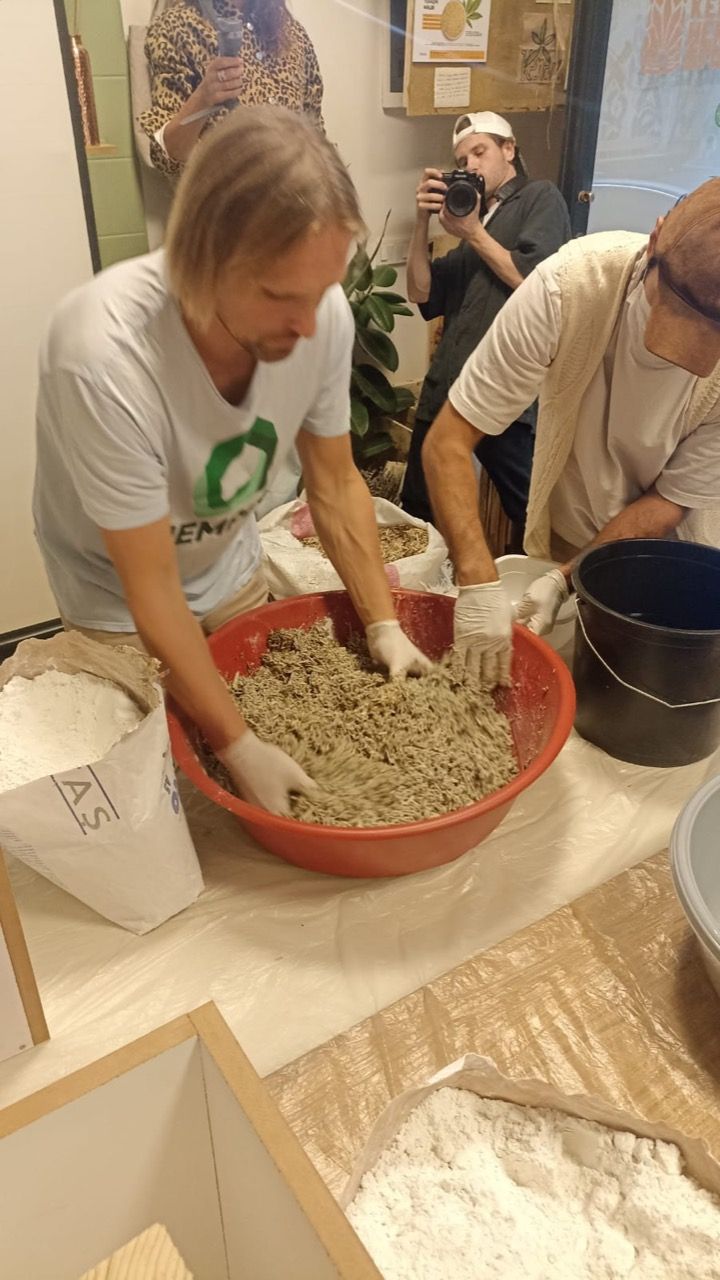
Approximate mix: a simplified 4:1:1 for teaching, with no additives. The goal was not a flawless wall but hands that learned; everyone got to know the consistency in their own palm.
Six: At the Art on Hemp Exhibition, Our Wall
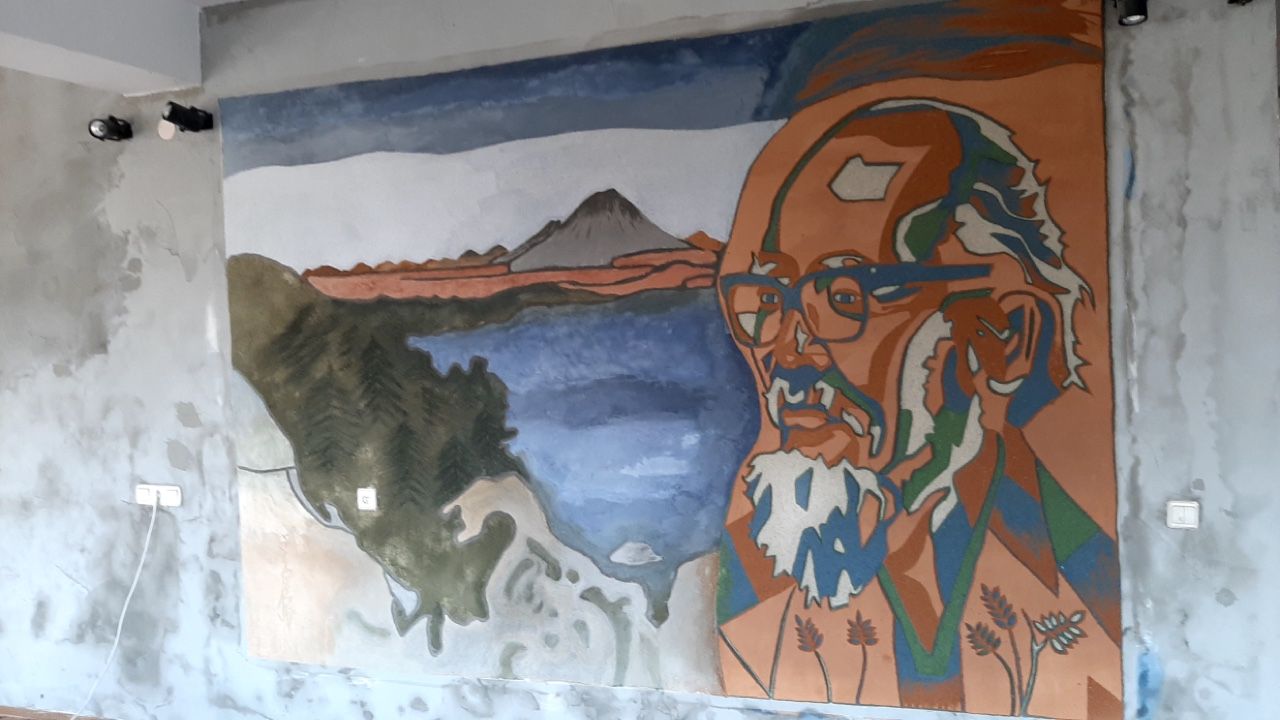
The sixth and, for now, final stop was an exhibition. A wall of ours was part of the Art on Hemp exhibition; it was like a showcase of the knowledge we had carried from trial to trial. An exhibition wall is both an ending and a beginning: the distilled form of everything we had learned up to that point, and an invitation that opens new questions in the minds of those who see it. Getting from that first rough, amateurish wall to this one took years; the difference between them was less a formula than the knowledge that had built up.
Approximate mix: the distilled 4:1:1; for the exhibition, fine-tuning in the surface and appearance. The hurd, water, and lime were always the same; it was we who changed.
The Changing Hands
The formulas stayed close to one another, because at their core they were always the same three materials. Some included a mineral additive; some had a difference in the plaster finish. What really changed was the knowledge in the hands that worked with the material. Throughout all these trials, hemp concrete taught us the same thing the plant does in the field. Do not rush. Find the right consistency. Let it breathe. And wait; that wall will keep pulling carbon from the air and hardening for years, even after you have forgotten it.
Field Frames