Honey: What the Honeybee Does Not Carry
Hemp, bees, and the limits of a label.
Can a honeybee make honey from hemp? Why hemp produces no nectar, why bees collect hemp pollen as a last-resort food, why cannabinoids do not pass into honey, the two limits set by the Turkish Food Codex Honey Communiqué, and what an honest “hemp honey” label looks like.
When you see “hemp honey” written on a jar, the first question that comes to mind is this: can a bee make honey from hemp? Once botany and bee physiology come together, the answer is much clearer than most people expect. That clarity is the most interesting part of the matter.
A Plant Without Nectar
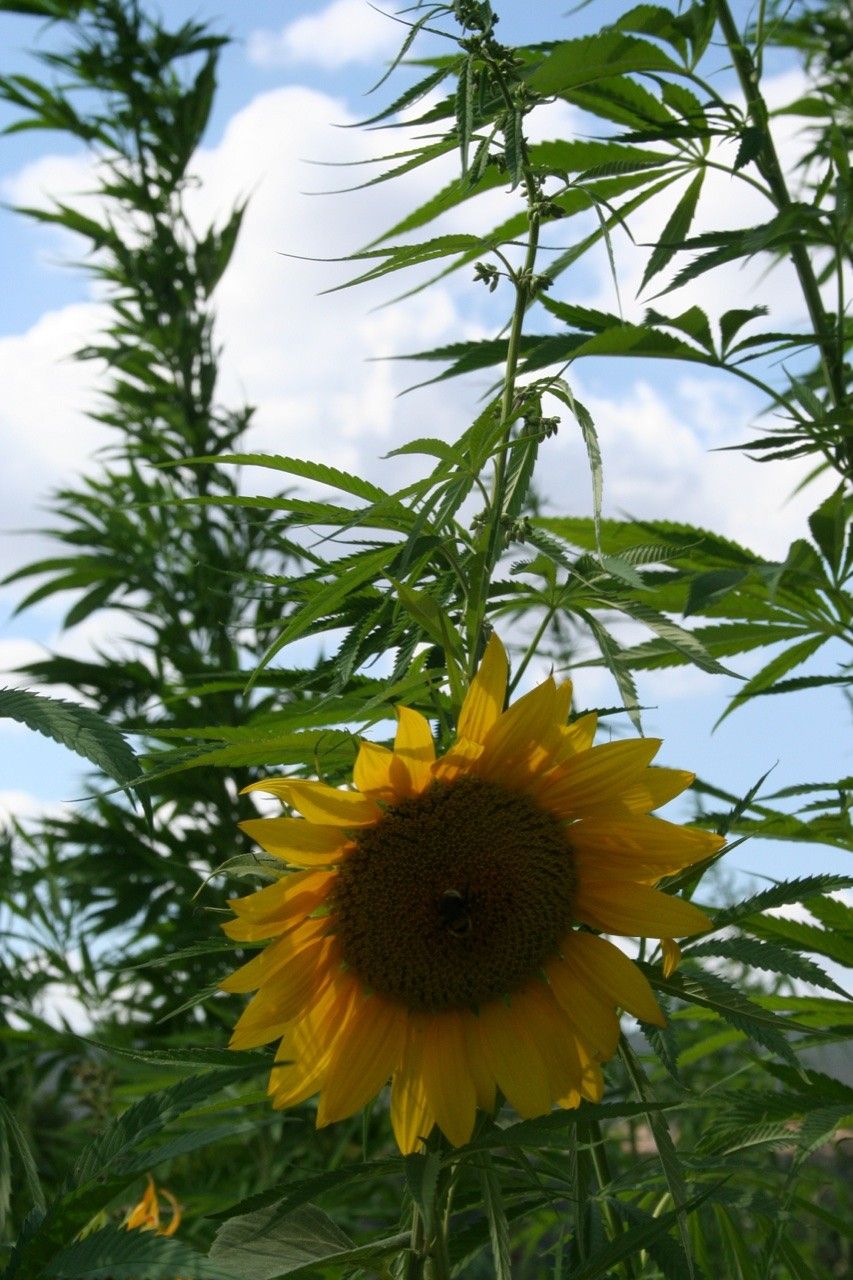
Start with the plant itself. Hemp is wind-pollinated; it entrusts its pollen to the air. This evolutionary choice has an important consequence: because hemp does not need to attract insects, it produces no nectar. None of the colors, scents, or rewards that draw bees to flowers are present in this plant. If you see bees in a hemp field, they have not come for nectar.
The only thing hemp offers bees is pollen, and that comes only from male plants. Hemp is dioecious: male and female flowers grow on separate individuals, and only the male flowers carry pollen sacs. Scientific observations show that bees usually collect hemp pollen as a last-resort food. Late in the summer, when other flowers have run out during the lean season, hemp releases abundant pollen, and bees turn to this protein when they have no other option. In one field study, more than twenty bee genera were recorded in hemp fields, with the honeybee the most dominant. Hemp is a valuable but backup food for bees.
Cannabinoids in Oil, Honey in Water
This is where the claim lives. Hemp's best-known active compounds, THC and CBD, are found in the resin-producing glandular hairs (trichomes) of female flowers, and they dissolve in fat. Honey, on the other hand, is water-based. The male flower pollen that bees collect contains no cannabinoids either. The picture is simple: a bee carries pollen; cannabinoids dissolve in oil, and honey is water-based. Chemically, honey a bee makes naturally should not pick up any hemp effect on its own.
The “hemp honey” and “CBD honey” products on the market, however, are two different things. The first is honey produced in a garden where bees can reach hemp pollen; it carries hemp pollen but no cannabinoids. The second is honey to which CBD has been added by hand after production. The first describes a botanical fact, the second describes a formulation. Both can be legitimate, but when they share the same name, the consumer cannot tell which one they are buying.
The Threshold of a Name
This is where the law's yardstick comes in. The exact figures vary slightly from country to country, but the logic is the same. Naming a honey after a specific flower requires a threshold. A honey can be named after a plant species, that is, labeled as monofloral honey, only if the proportion of pollen grains in it from that single species reaches a certain level. This proportion is determined in the laboratory by counting pollen grains under a microscope. This discipline has a name as well: melissopalynology, the reading of honey's pollen.
In Turkey, the matter is governed by the Turkish Food Codex Honey Communiqué, and the communiqué closes it off from two sides. First: for a honey to carry the name of a botanical source, such as linden honey or sunflower honey, it must have the palynological characteristics of that source and meet the minimum pollen proportions set separately for each plant in the communiqué's annex. To call something “hemp honey,” a measurable pollen content is required. Second, and more decisive: under the communiqué, no substance may be added to honey; honey must be free of substances that are not part of its natural composition. The practical consequence is clear. In Turkey, adding CBD to honey afterward and still selling the product as “honey” is not permitted under the regulation. The moment an additive goes in, the product stops being pure honey and must be sold under another name.
This also matches the honeybee's nature. A bee does not stay loyal to a single flower; it gathers from dozens of different plants across kilometers of land. So no jar is ever made entirely from one flower; what matters is dominance. Making hemp pollen the dominant one, when bees turn to it only in scarcity, is a difficult thing to engineer. The idea of “pure hemp honey” is resisted by chemistry, by bee behavior, and by regulation alike.
An Honest Label
This does not mean the idea of hemp honey is meaningless. What is needed is to separate the honest from the misleading and to give the right name to the right product. The most valuable result comes from bringing together a good honey and a clean hemp extract, transparently: a rich honey from a naturally foraged environment with high flower diversity, and, as a separate product, a CBD whose content is documented by laboratory testing. Anyone who wants to combine the two should do so with a product that openly says what it is. The difference lies in whether the sentence on the jar carries a fact or an impression.

In the end, the question becomes less about honey than about honesty. The bee knows what it carries: pollen. Chemistry tells us which substance dissolves in which: oil does not stay in water. The law reminds us that earning a name requires a threshold, and that pure honey has its own limits. What remains is the single question of what you write on the jar, and that is a human responsibility.