An Indoor Facility in Lelystad: Visiting Linsboer
A single-line production model in which the plant stays in place until harvest, and a day with head grower Jay Honey.
In June 2026, at Fluence's invitation, we visited Linsboer, a licensed hemp grower in Lelystad, the Netherlands. With head grower Jay Honey, we discussed how the rooms are laid out, how vegetative growth and flowering share the same room, biological pest control, and drying with branch-level labels.
In the second week of June 2026, at Fluence's invitation, we were in Lelystad in the Netherlands with a small group of growers from several countries. The visit centered on Linsboer B.V. Linsboer is one of the licensed growers in the Wietexperiment, the Dutch program that tests a legal hemp supply for coffeeshops. The hemp they grow is sold to adults in coffeeshops in the municipalities that take part in the trial. This framework is the first thing to keep in mind as you read about everything we saw at the facility.
We toured the facility with head grower Jay Honey. Jay is originally from Nevada and has worked in large-scale production facilities for about fifteen years.
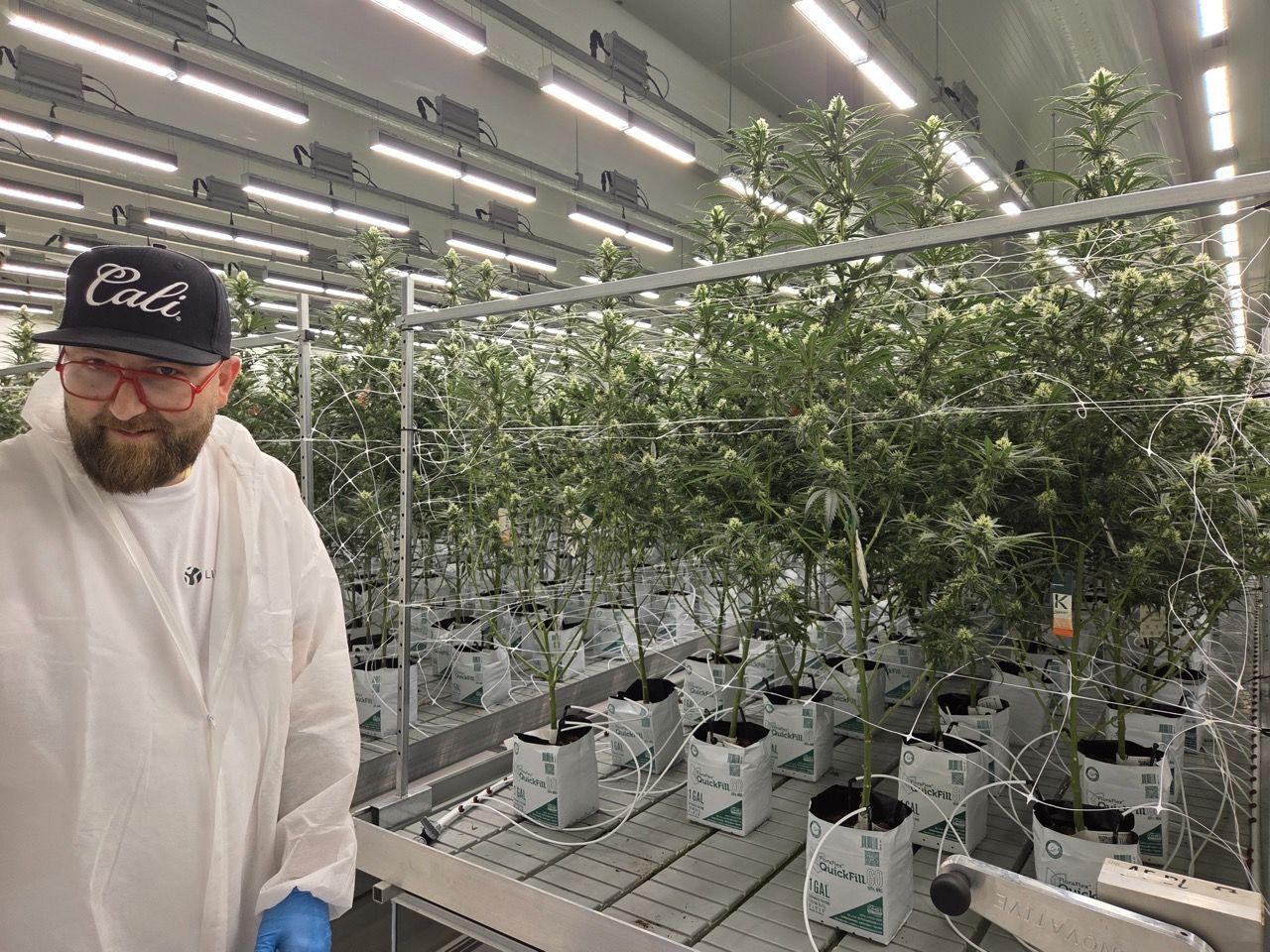
The Plant Stays Put
What made us think most at Linsboer was the layout of the rooms. The facility has no separate vegetative room. A clone taken from the mother room goes directly into a 450-square-meter grow room, where it spends its vegetative phase. Then the room switches to a 12-hour light and 12-hour dark cycle, and the plant starts flowering in the same place. The plant is not moved until harvest.
Jay described the benefit this way: not moving plants inside the facility saves a great deal of labor, and the space that would have gone to a vegetative room becomes flowering space. On average, each room holds 2,187 plants, and once the cycle settles, one room is harvested every 12 days. We saw that the people working in the facility were happy with the setup. Because the plants are not moved, the work is less physically demanding.
The clones come from tissue culture, and no seed is used in production. The mother room holds many genotypes, and selection is narrowed over the long term.
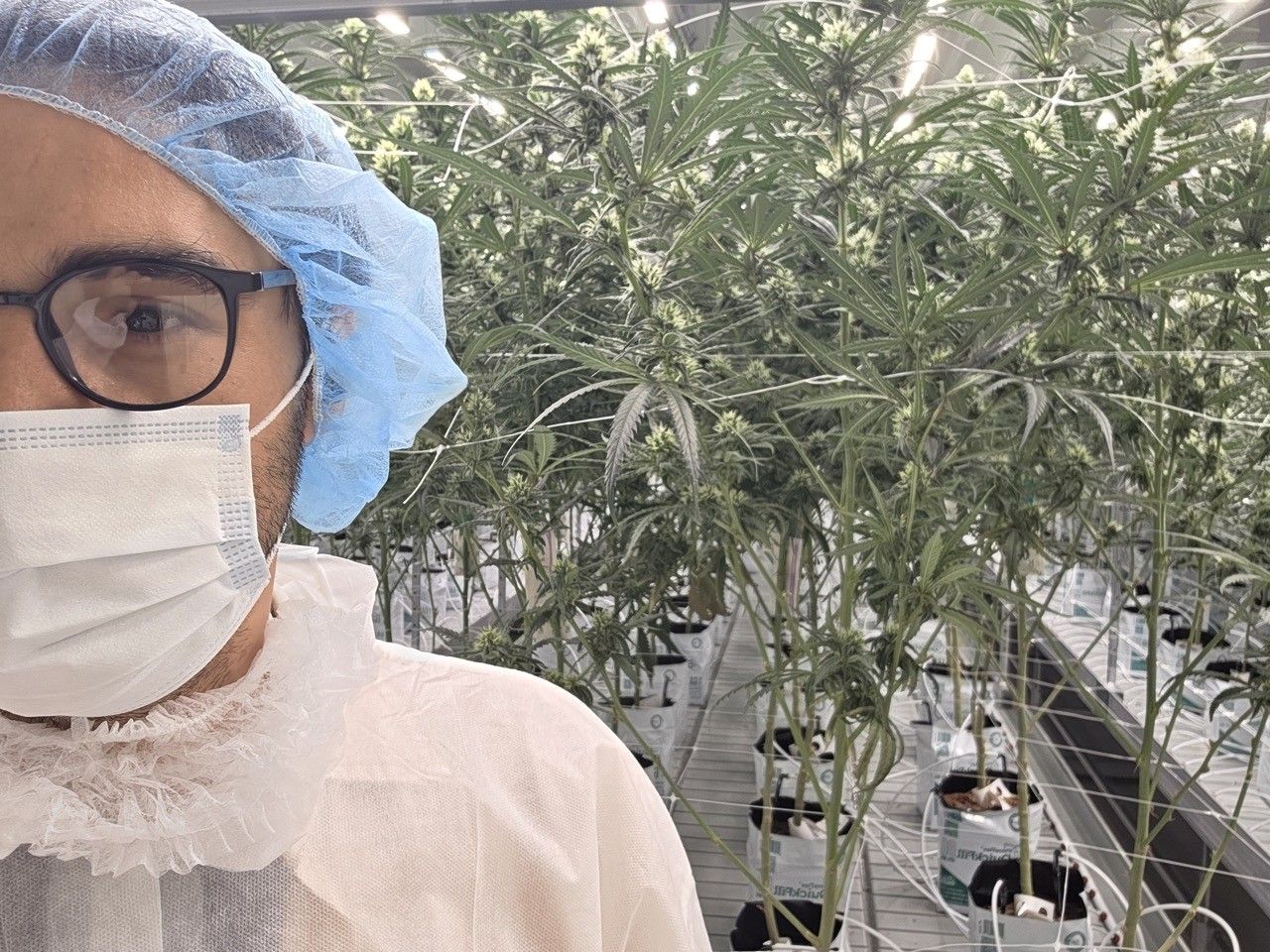

Canopy
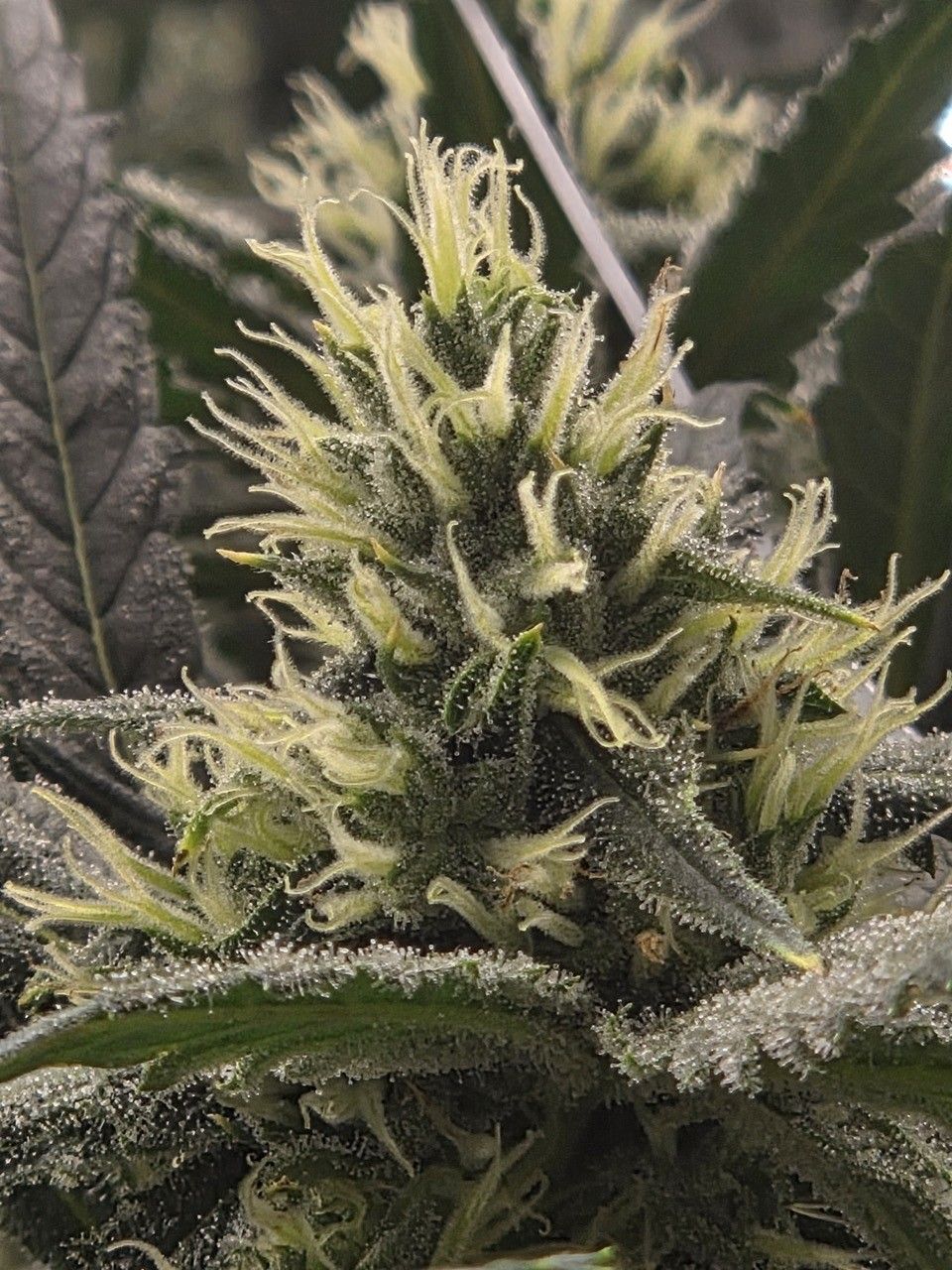
The rooms use Fluence SPYDR LED fixtures. A trellis net supports the canopy. Light spreads evenly across the whole surface. The lower branches are pruned (lollipopping). When the weak lower branches are removed, the plant's energy goes to the upper colas that receive light, and air moves more freely under the canopy.

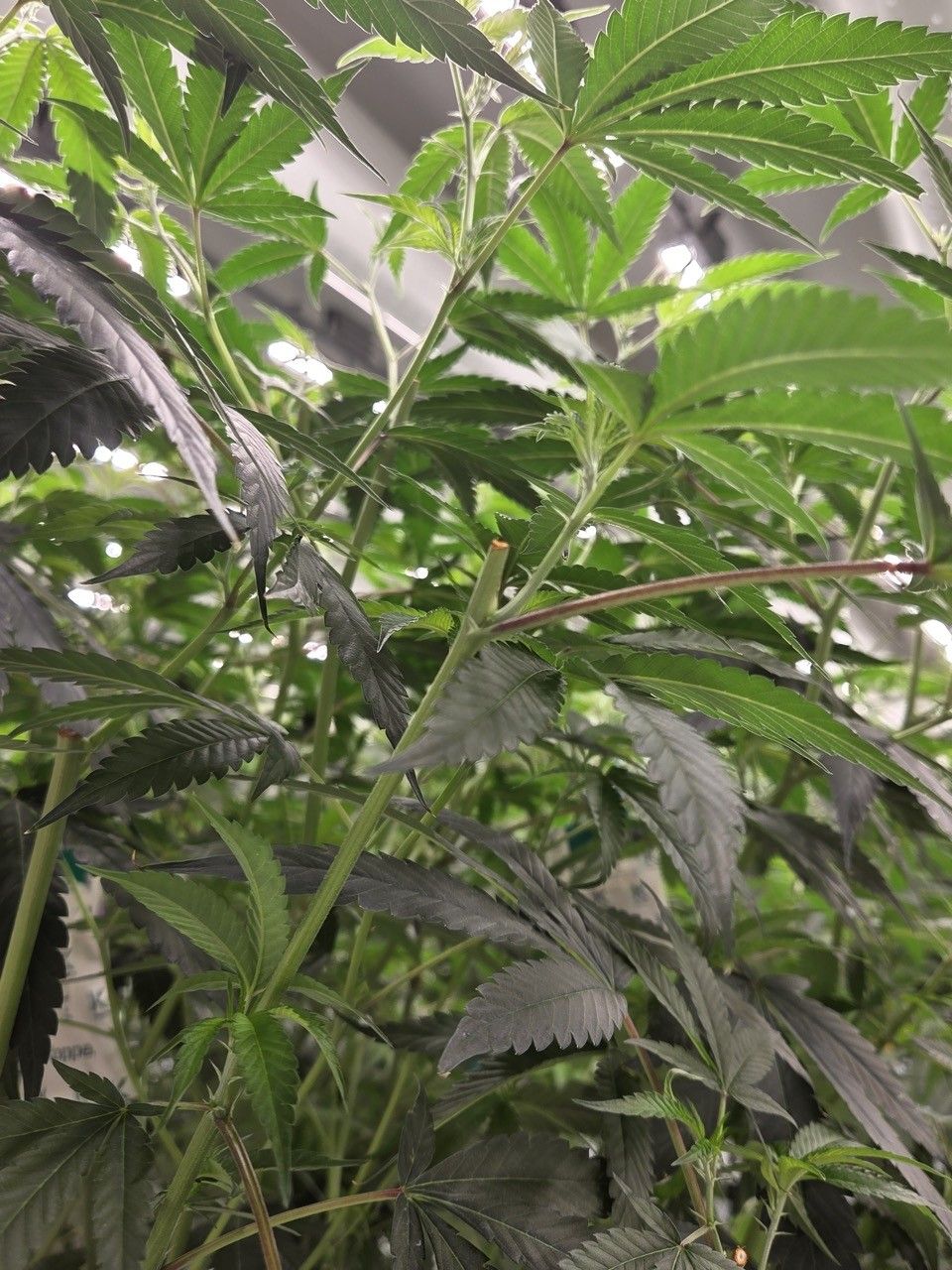
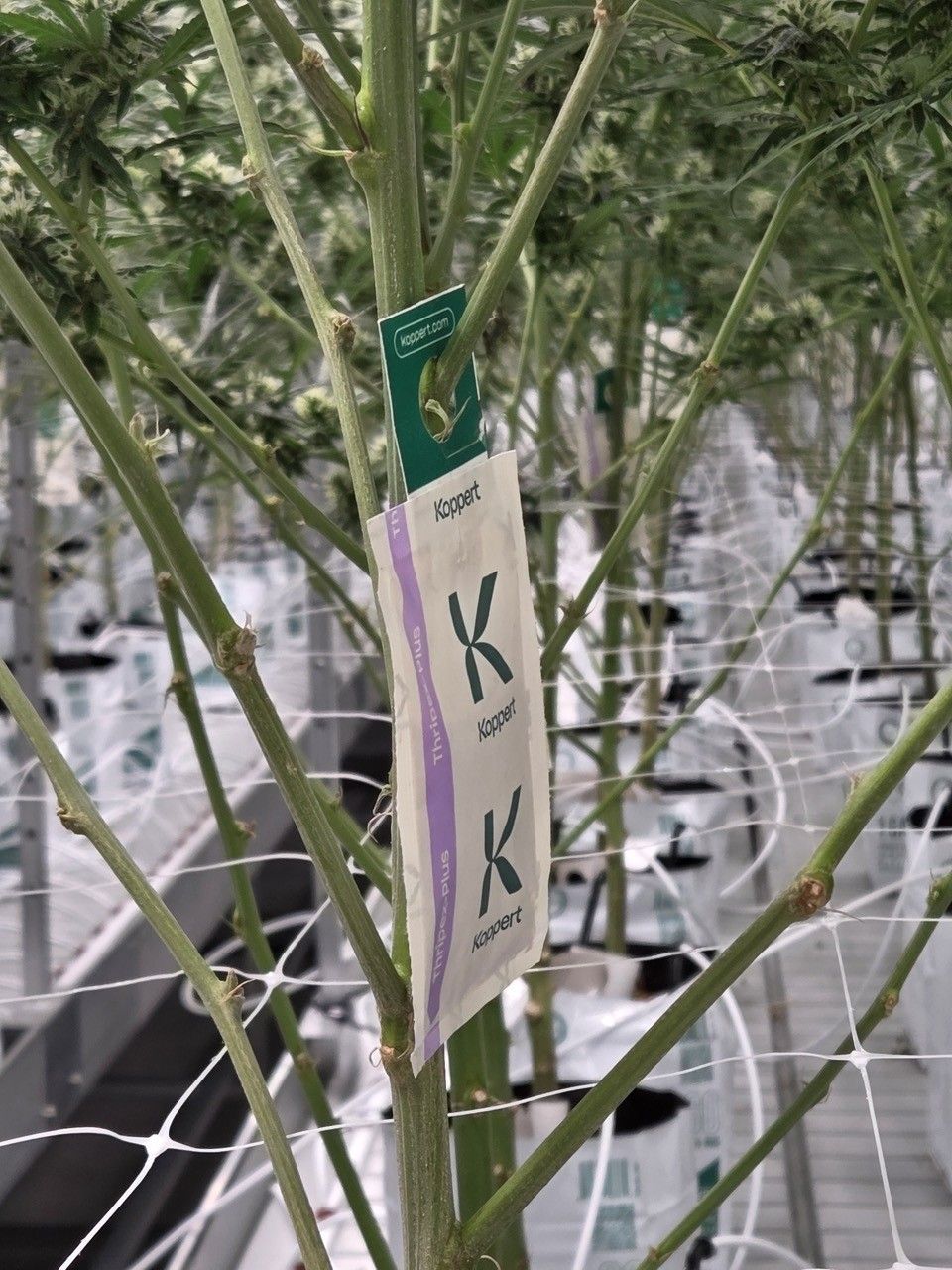
Pests are managed biologically rather than with chemical pesticides. Koppert Thripex-Plus sachets hang on the branches. The predatory mites inside the sachets feed on thrips.
Drying and Trimming
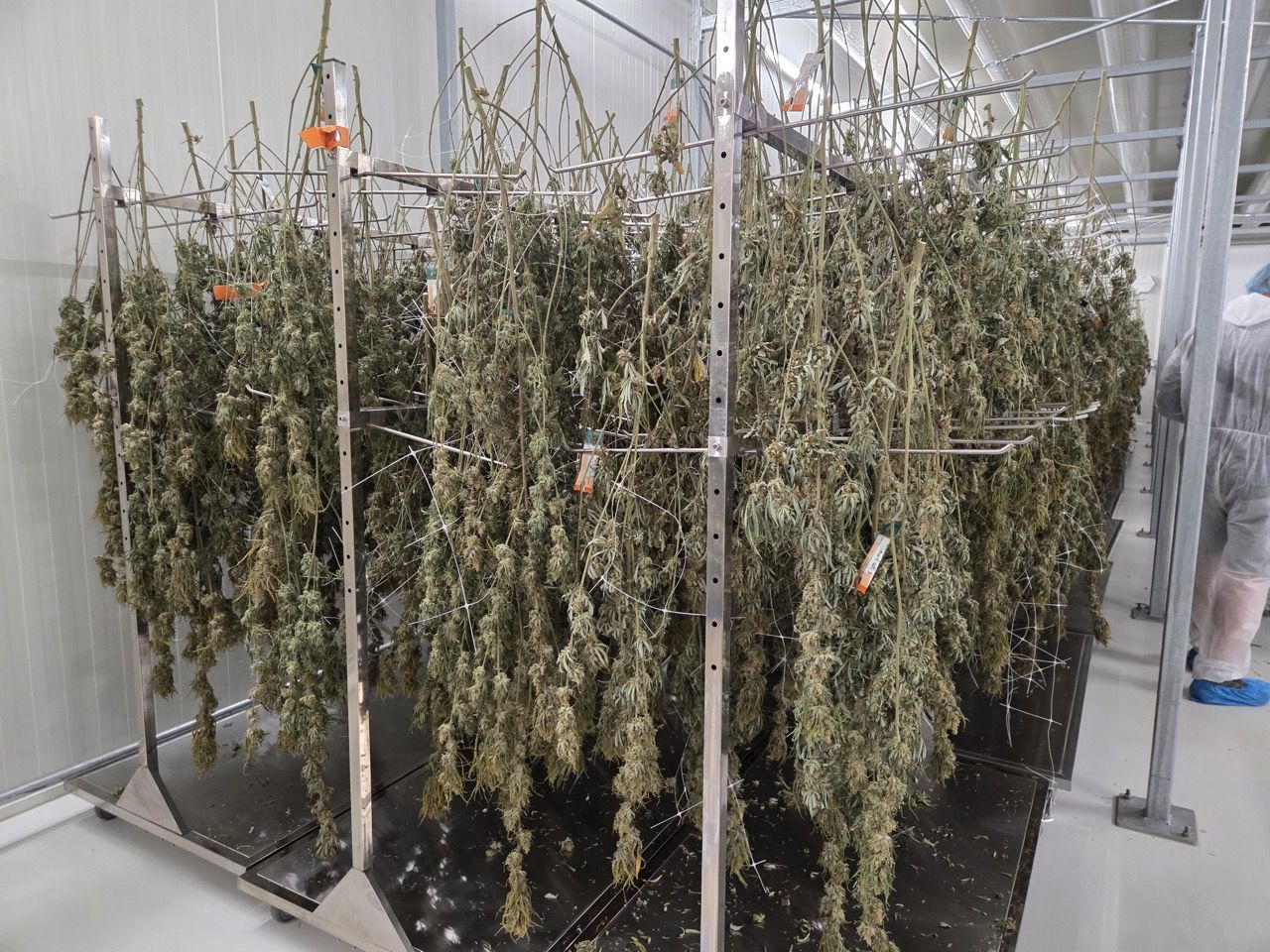
Harvested plants are dried whole, hung upside down by their stems on stainless steel wheeled hanging racks. Every branch is labeled. According to publicly available information, growers in the trial record every movement of the plant in the government tracking system, and the branch-level label carries that record inside the facility.
Trimming, meaning the removal of leaves from dried flowers, is done by hand. According to Jay, hand trimming protects revenue. Selling only the flower and leaving the trimming to someone else would mean a major loss of income.

Notes for Us
Linsboer measures success by taste, aroma, and whether customers come back for the same strain. In medical production, the benchmark is that every batch comes out the same. That is why we do not copy the facility's practices as they are. For example, at Linsboer, drying and trimming happen in the same space. Drying needs low humidity, while trimming releases particles and moisture into the air. In medical production, these two steps need separate rooms.
Even so, the room layout that does not move plants, biological pest control, and branch-level traceability were the topics we kept returning to as we discussed our own facility plans.